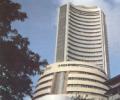
There has been a rise in the number of cases of stock market manipulation and price rigging, according to the Securities and Exchange Board of India (Sebi).

Charitable trusts, whether temples, churches or mosques, NGOs, educational institutions or societies, if registered as non-profit organisations, will not only have to disclose the source of their funds, but also be scrutinised for large monetary transactions. The change has been done by an amendment to the Prevention of Money Laundering Act (PMLA) 2002, notified in the Official Gazette on November 12, to bring NPOs under the purview of the law.

While MCX-SX is still waiting for regulatory approval to host equity trading, BSE has been struggling to maintain its 30 per cent market share in the cash segment.
The revival of the initial public offer market has prompted brokerages to re-start margin funding, a process by which they finance high net worth clients to subscribe to new issues.
The 8,965 officials include an estimate for an extra 760 sanctioned personnel in the Indian Revenue Service. Apart from this, the department would have to create 42 posts of principal chief commissioner of Income Tax (Principal CCITs), 74 CCITs, 116 Senior CCITs and Deputy CITs. "This would have to been done through simultaneous abolition of posts in other grades," said the report.
Market experts said the premiums were down from around 15 per cent before the Union Budget last week to 5-7 per cent at present. Long-only FIIs allocate funds for each market, which entails a certain premium, based on growth projections for the year.
Nearly 80 stocks on the Bombay Stock Exchange (BSE) today witnessed an unusual price movement of up to 20 per cent. Belonging to 'S' and 'Z' categories and the trade-to-trade group, these scrips normally attract 5 per cent circuit breakers.
No circuit filter on the day of listing helps operators to push up prices.
Brokers said the Securities Transaction Tax regime and high stamp duty charges on share market transactions were the main reasons for the high cost of trading in India. As per the current STT rate structure, a delivery-based cash market transaction is taxed at Rs 12,500 per Rs 1 crore (Rs 10 million), or 0.125 per cent. The tax is levied on both buyers and sellers.
With rising instances of non-compliance with rules, the country's top depository National Securities Depository Ltd (NSDL) has revised the penalty imposed on erring market participants, which came into effect from May 1.
Stockbrokers who have been taking advantage of the ambiguity in the Income Tax Act rules to reduce their tax payouts could be in for a rude shock.
In a notice sent to all its members on March 20, BSE has listed nine types of violation for which penalty norms have been revised. These are circular trading, fictitious trading, creating artificial volumes, price manipulation (rigging), manipulation of order book, placing of orders at unrealistic prices when circuit filters are open, placing orders that result in rogue trades, late submissions of details or submission of wrong information.
Share transfer agents have come under the Securities and Exchange Board of India's scanner after the market regulator received several complaints about their misconduct.
The Income Tax Department has moved the Bombay High Court to recover nearly Rs 500 crore from top stock brokers, who have managed to avoid paying income tax on the pretext of claiming depreciation on their Bombay Stock Exchange membership card.
Though the government in 2005 put an end to dividend stripping by enacting a law, disallowing the sale of mutual fund units within nine months if they were purchased three months prior to the dividend record date, the I-T department has been trying to recover taxes from several assessees, who exploited this loophole prior to the enactment of the new law and evaded tax.
The Securities and Exchange Board of India is considering its Primary Market Advisory Committee's recommendation to introduce a uniform face value system for all listed companies. At present, companies decide their individual face value between Rs 1 and Rs 100.
Eight years after it was indicted by the market regulator for 'profiting from advance knowledge' of news website Tehelka's market-moving exposs, brokerage house First Global says it has procured documents under the Right to Information Act that show how the regulator fabricated a case against it.
Rules governing short-selling in various jurisdictions continue to generate controversy among regulators, lawmakers and market participants. While the US capital market regulator Securities and Exchange Commission has banned short-selling of financial shares after it was blamed for the collapse of Lehman Brothers, in India, the practice had come under the scanner as foreign institutional investors were lending stocks overseas to facilitate short-selling.
As per Sebi's new guideline, all companies will have to disclose information about shares pledged by promoters within a period of seven days after the promoters give the companies an intimation. Analysts are of the view that most of the promoters were hesitating to disclose this information as there is a fear among investors that the pledging of shares would cost promoters dear.
The Prevention of Money Laundering Act, 2002, requires all financial institutions, banks and intermediaries like merchant bankers, FIIs and stock brokers to submit reports on suspicious transactions above Rs 1 million in Indian or foreign currency. According to FIU's annual report for 2007-8, while the agency received 2.2 million such cash transaction reports from banks, other financial intermediaries put together have submitted only 2,500 suspicious transaction reports.
 © 2025 Rediff.com - Investor Information - Advertise with us - Disclaimer - Privacy Policy - Sitemap - Feedback - About us - Terms of use - Grievances